
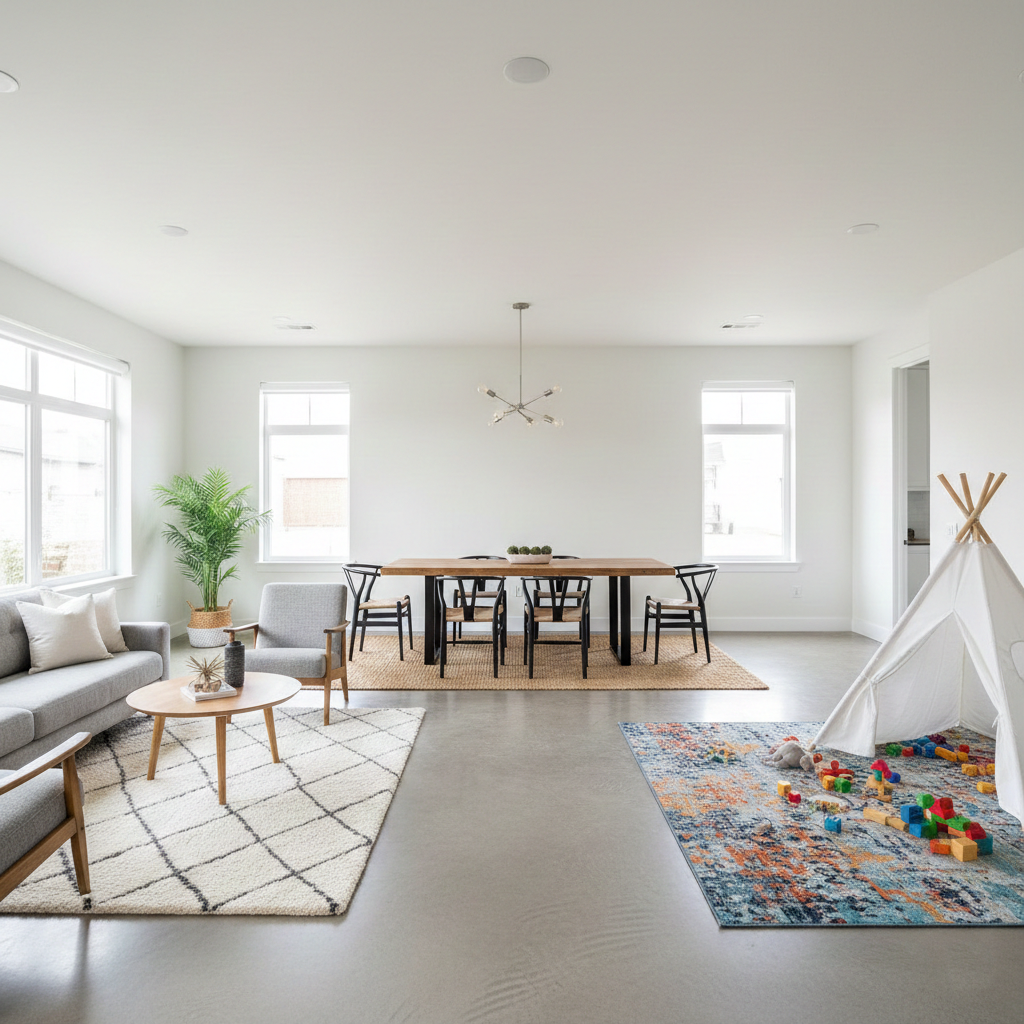
A rug isn’t just décor – it’s something you live on every day. So it’s only natural to wonder: how long should a rug actually last?
The honest answer depends on two things:
-
What it’s made of
-
How much you paid for it (and where you use it)
Understanding realistic lifespan expectations can help you buy smarter, avoid disappointment, and choose the right rug for the right space.
Let’s break it down.
Average Rug Lifespan at a Glance
| Rug Type / Material | Typical Lifespan | Best For |
|---|---|---|
| Synthetic (Polyester, Polypropylene) | 1–5 years | Budget buys, rentals, kids’ rooms |
| Cotton | 2–5 years | Casual spaces, layering |
| Jute / Sisal | 3–7 years | Low-traffic, dry areas |
| Wool (Machine-Made) | 5–10 years | Living rooms, bedrooms |
| Wool (Hand-Tufted) | 8–15 years | Medium-traffic areas |
| Wool (Hand-Knotted) | 20–50+ years | Long-term investment pieces |
| Silk / Viscose | 5–15 years | Decorative, low-traffic spaces |
These ranges assume normal household use and proper care.
Lifespan by Material
Synthetic Rugs (Polypropylene, Polyester, Nylon)
Expected lifespan: 1–5 years
Synthetic rugs are often the most affordable and easiest to clean, but they tend to show wear quickly.
Pros
-
Budget-friendly
-
Stain-resistant
-
Lightweight and easy to replace
Cons
-
Fibers flatten over time
-
Colors may fade
-
Less comfortable underfoot
Best use:
Apartments, dorms, playrooms, temporary spaces, or trend-driven designs.
Cotton Rugs
Expected lifespan: 2–5 years
Cotton rugs are soft and casual but not built for heavy wear.
Pros
-
Lightweight
-
Often washable
-
Affordable
Cons
-
Wear down quickly
-
Absorb stains easily
-
Can lose shape
Best use:
Bedrooms, layering over larger rugs, low-traffic spaces.
Natural Fiber Rugs (Jute, Sisal, Seagrass)
Expected lifespan: 3–7 years
Natural fiber rugs offer texture and style but require the right environment.
Pros
-
Durable texture
-
Timeless, organic look
Cons
-
Sensitive to moisture
-
Rougher underfoot
-
Limited stain resistance
Best use:
Dining rooms, home offices, low-moisture areas with light to moderate traffic.
Wool Rugs (Machine-Made)
Expected lifespan: 5–10 years
Wool is naturally resilient, and even machine-made wool rugs outperform most synthetics.
Pros
-
Durable fibers
-
Better comfort and insulation
-
Naturally soil-resistant
Cons
-
Higher upfront cost
-
Some initial shedding
Best use:
Living rooms, bedrooms, family rooms.
Wool Rugs (Hand-Tufted)
Expected lifespan: 8–15 years
Hand-tufted rugs offer a step up in quality and comfort.
Pros
-
Thick, plush feel
-
Better construction
-
Rich colors and patterns
Cons
-
Latex backing can degrade over time
-
Not as durable as hand-knotted
Best use:
Medium-traffic rooms where comfort matters.
Wool Rugs (Hand-Knotted)
Expected lifespan: 20–50+ years
These are true investment pieces. With proper care, hand-knotted rugs can last decades – sometimes generations.
Pros
-
Extremely durable
-
Fibers bounce back over time
-
Can be professionally repaired and cleaned
Cons
-
Highest upfront cost
-
Heavier and more substantial
Best use:
Main living areas, heirloom spaces, long-term homes.
Silk & Viscose Rugs
Expected lifespan: 5–15 years (with care)
Silk and viscose rugs are more about beauty than durability.
Pros
-
Luxurious sheen
-
Elegant patterns
Cons
-
Delicate fibers
-
Prone to water damage
-
Not ideal for heavy use
Best use:
Bedrooms, formal rooms, decorative areas.
How Price Impacts Rug Longevity
While price isn’t everything, it often reflects:
-
Fiber quality
-
Density and construction
-
Durability under foot traffic
Budget Rugs ($100–$400):
-
Best for short-term use
-
Expect visible wear within a few years
Mid-Range Rugs ($400–$1,000):
-
Good balance of comfort and longevity
-
Ideal for most households
Investment Rugs ($1,000+):
-
Built to last decades
-
Cost more upfront but often cost less over time
What Shortens (or Extends) a Rug’s Life?
Shortens lifespan:
-
Heavy foot traffic
-
Direct sunlight
-
No rug pad
-
Improper cleaning
Extends lifespan:
-
Rotating the rug regularly
-
Using a quality rug pad
-
Spot cleaning spills quickly
-
Professional cleaning when needed
So… How Long Should Your Rug Last?
A rug should last as long as its role in your home demands.
-
High-traffic living room? Invest in durability.
-
Guest room or rental? Budget-friendly makes sense.
-
Forever home centerpiece? Choose quality that grows with you.
The smartest rug purchase isn’t about spending the most – it’s about matching material, price, and placement.
When those align, your rug won’t just last longer – it’ll look better doing it.
About Rugs.comRugs.com is a one-stop online rug shop for all your floor covering needs. With over 100,000 rug designs, the extensive selection of indoor and outdoor rugs offers a wide variety of shapes, styles, and textures – perfect for every season of the year and season of life. With more than 60 years of experience in hand-knotted and machine-woven rugs, the family-owned and operated business believes that “Beneath Every Moment” – whether it is a baby’s first step, a first dance, or a cherished memory – there should be a beautiful rug. Helping shoppers find the perfect foundation for life’s moments, Rugs.com is making online shopping simple with the lowest possible prices, fast and free shipping every day, award-winning customer support, and a 30-day free return policy. Rugs.com ships millions of rugs nationwide from the company’s South Carolina and California warehouses. Learn more at www.rugs.com.