
Have you ever walked into a room that felt… off?
The furniture is there. The decor is nice. But something doesn’t feel quite right—like everything is just randomly placed.
Chances are, you’re looking at a floating furniture problem.
It’s one of the most common interior design mistakes – and one of the easiest to fix. The solution? A well-placed rug.
What Is the “Floating Furniture” Problem?
“Floating furniture” happens when pieces like sofas, chairs, or tables are not visually connected to each other.
Common signs include:
- A sofa pushed against the wall with nothing anchoring it
- Chairs spaced too far apart
- A coffee table that feels disconnected
- A room that feels empty despite having furniture
The result:
A space that feels awkward, unfinished, and lacking cohesion.
Why Floating Furniture Feels So Uncomfortable
This isn’t just a design issue – it’s psychological.
Our brains look for visual groupings. When furniture isn’t anchored, the room feels:
- Disjointed
- Hard to navigate
- Less inviting
Without a clear layout, people subconsciously don’t know:
- Where to sit
- Where conversations happen
- How the room is meant to be used
How Rugs Fix the Problem Instantly
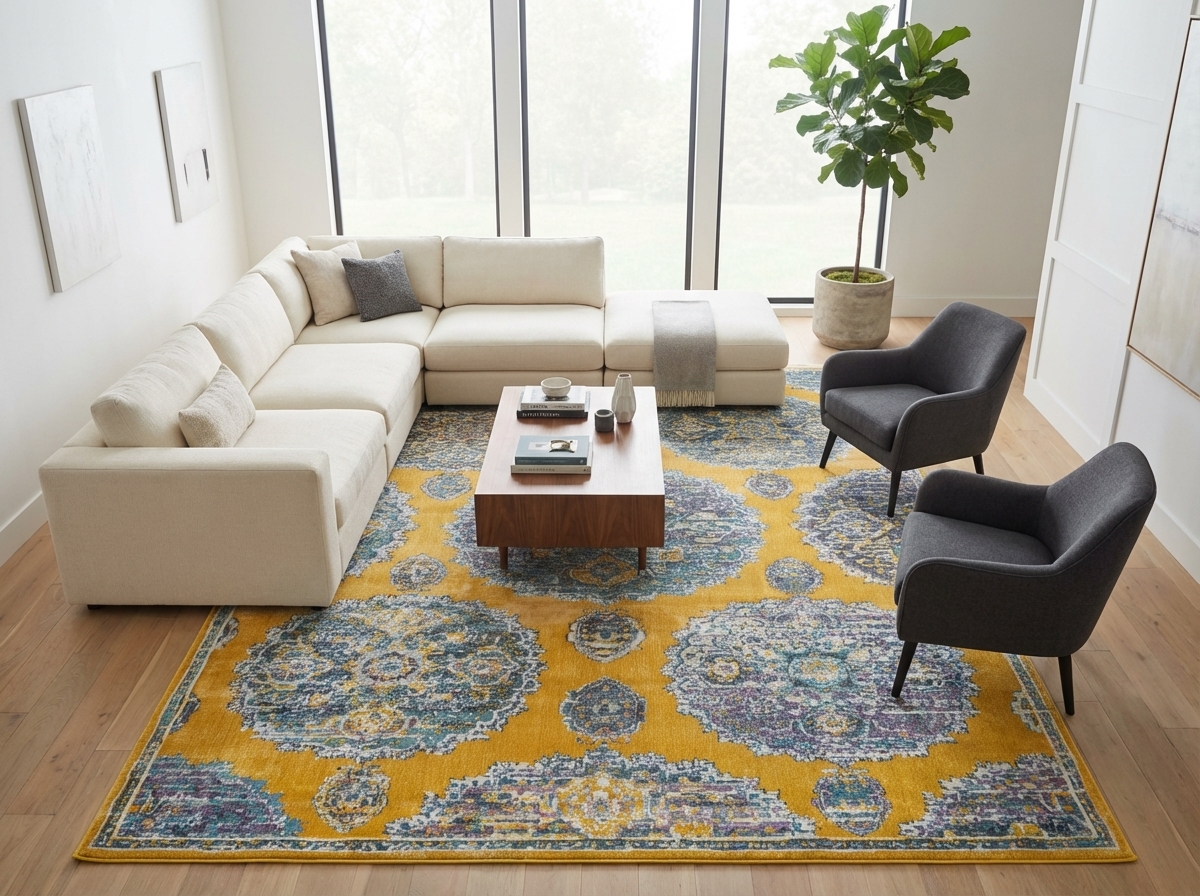
A rug acts as a visual anchor – it pulls furniture together into a defined space.
Instead of separate pieces floating around the room, a rug creates a unified zone.
What a Rug Does:
- Defines a seating area
- Connects furniture pieces
- Creates structure in open spaces
- Makes the room feel intentional
Think of a rug as the “frame” that holds your furniture arrangement together.
The Right Way to Use a Rug to Anchor Furniture
Not all rug placements solve the problem. In fact, the wrong size rug can make it worse.
Here’s how to do it correctly:
1. The “All Legs On” Rule (Best for Larger Rooms)
Place all furniture legs on the rug:
- Sofa
- Chairs
- Coffee table
Creates a fully connected, high-end look – best for large living rooms
2. The “Front Legs On” Rule (Most Common)
Place only the front legs of furniture on the rug.
Works well in medium-sized rooms to keep everything visually connected without needing a huge rug
3. The “Coffee Table Only” Mistake (Avoid This)
A small rug that only sits under the coffee table is the biggest cause of floating furniture.
- Makes furniture feel disconnected
- Shrinks the visual space
If your rug doesn’t reach your seating, it’s too small.
Rug Size: The Hidden Reason Your Layout Feels Off
One of the biggest mistakes homeowners make is choosing a rug that’s too small.
Signs your rug is too small:
- It doesn’t touch any furniture
- It looks like it’s “floating” in the middle of the room
- The room still feels disconnected
General size guidelines:
- Living rooms: 8×10 or 9×12 rugs work best
- Larger layouts: Go bigger if possible
👉 When in doubt, size up – not down.
How Rugs Fix Open Floor Plan Layouts
Open floor plans are especially prone to floating furniture because there are no walls to define spaces.
Rugs solve this by:
- Creating clear zones (living, dining, workspace)
- Preventing furniture from drifting visually
- Making large spaces feel organized
Example:
- A rug under the sofa = living room
- A rug under the table = dining area
Without rugs, everything blends together.
Before vs After: What Changes With a Rug
Before:
- Furniture feels scattered
- Room looks incomplete
- No clear focal point
After:
- Furniture feels connected
- Space looks styled and intentional
- Room becomes more inviting
It’s one of the highest-impact, lowest-effort design upgrades you can make.
Common Mistakes to Avoid
Even with a rug, layout issues can persist if you make these mistakes:
- Choosing a rug that’s too small
- Placing the rug too far from furniture
- Ignoring room proportions
- Using multiple small rugs instead of one large one
When You Might Not Need a Rug
There are a few exceptions where rugs aren’t necessary:
- You want to showcase high-end flooring
- The space is already clearly defined (rare in open layouts)
But in most cases, a rug improves both function and appearance.
Final Thoughts: Rugs Are More Than Decor
Rugs aren’t just about color or pattern – they’re about structure.
If your room feels off and you can’t figure out why, it’s often not the furniture – it’s how the furniture is arranged.
And more often than not, the missing piece is a rug.
Key Takeaways
- Floating furniture makes rooms feel disconnected and unfinished
- Rugs act as a visual anchor that brings everything together
- The right rug size is critical—too small makes the problem worse
- Rugs are essential in open floor plans
- Proper placement transforms both function and feel
If your space doesn’t feel quite right, don’t start by replacing furniture.
Start with the foundation.
Start with the rug.
About Rugs.com
Rugs.com is a one-stop online rug shop for all your floor covering needs. With over 100,000 rug designs, the extensive selection of indoor and outdoor rugs offers a wide variety of shapes, styles, and textures – perfect for every season of the year and season of life. With more than 60 years of experience in hand-knotted and machine-woven rugs, the family-owned and operated business believes that “Beneath Every Moment” – whether it is a baby’s first step, a first dance, or a cherished memory – there should be a beautiful rug. Helping shoppers find the perfect foundation for life’s moments, Rugs.com is making online shopping simple with the lowest possible prices, fast and free shipping every day, award-winning customer support, and a 30-day free return policy. Rugs.com ships millions of rugs nationwide from the company’s South Carolina and California warehouses. Learn more at www.rugs.com.