
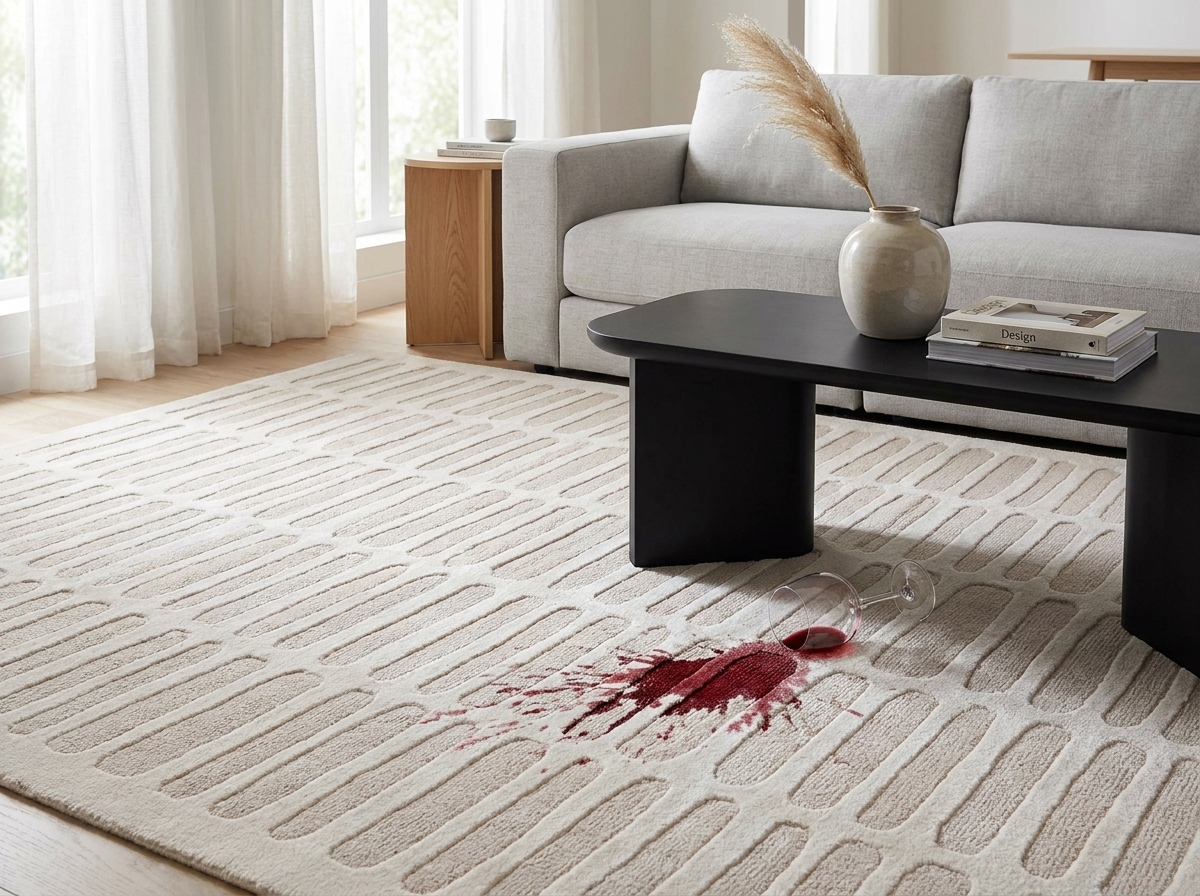
There are two kinds of rug spills. The first kind, you notice immediately – a glass of red wine tips over at a dinner party and everyone freezes. The second kind, you find days later – a dried coffee ring under the couch, a smear of pasta sauce you missed cleaning up, a mystery spot that used to be something.
Both are fixable. But the approach depends on what you spilled, how long it’s been there, and what your rug is made of.
Here’s exactly what to do – stain by stain, step by step.
The First Rule: Act Fast, But Don’t Panic
The single biggest predictor of whether a stain comes out is how quickly you get to it. A fresh spill is mostly sitting on top of the fibers. A dried spill has bonded to them. Every hour you wait makes the job harder.
But acting fast doesn’t mean scrubbing frantically. The worst thing you can do to a rug stain is grind it deeper into the pile with a stiff brush or a rough cloth. Blot, don’t scrub. Work from the outside of the stain in, so you don’t spread it. And always test any cleaning solution on a hidden corner of the rug first – some dyes and fibers react badly to even mild cleaners.
Keep a few things on hand and you’ll be ready for almost anything: white cloths or paper towels, a spray bottle of cool water, mild dish soap, white vinegar, and baking soda. That’s it.
Red Wine
Red wine is the stain everyone dreads, and for good reason – the tannins and pigments bond quickly to natural fibers like wool and cotton. But if you catch it fresh, it comes out more easily than you’d think.
If it’s fresh: Blot up as much wine as you can with a clean white cloth, pressing down firmly without rubbing. Sprinkle a generous layer of salt or baking soda over the spot to pull moisture up out of the fibers. Let it sit for 10 minutes, then vacuum it up. Mix one tablespoon of dish soap and one tablespoon of white vinegar into two cups of cool water. Dab the solution onto the stain with a clean cloth, working from the outside in. Blot with a dry cloth to lift the moisture. Repeat until the stain is gone.
If it’s dried: Mix equal parts hydrogen peroxide and cool water. Test on a hidden spot first – hydrogen peroxide can lighten some dyes. If it’s safe, apply the mixture to the stain, let it sit for 20 to 30 minutes, then blot with a clean damp cloth. Repeat as needed. For stubborn set-in stains, a professional cleaner is usually the safest option, especially on wool or silk rugs.
Avoid: Hot water. It sets the tannins and locks the stain in permanently.
Coffee and Tea
Coffee and tea stain in a similar way to wine – pigments plus tannins – but they’re usually a little more forgiving.
If it’s fresh: Blot up as much liquid as possible with a clean cloth. Mix one tablespoon of dish soap, one tablespoon of white vinegar, and two cups of cool water. Dab the solution onto the stain from the outside in, then blot dry. Repeat until the color lifts.
If it’s dried: Sprinkle baking soda over the stain and let it sit for 15 minutes to lift any remaining moisture and odor. Vacuum it up. Then apply the dish soap and vinegar solution above. For stubborn coffee stains, a paste of baking soda and cool water applied directly to the spot, left for an hour, and then blotted away often does the trick.
Watch out for: Cream and sugar. If your coffee had dairy in it, treat the spot for both a tannin stain and a protein stain (see the milk section below) – the two need slightly different approaches.
Tomato Sauce and Grease
Tomato-based stains are tricky because they’re both pigmented and oily. You have to lift the grease first, then treat the color.
Step one: Scrape up any solids gently with a spoon or butter knife. Don’t press down.
Step two: Sprinkle cornstarch or baking soda over the greasy area and let it sit for 15 to 20 minutes. This pulls the oil up out of the fibers. Vacuum thoroughly.
Step three: Mix one tablespoon of dish soap into two cups of cool water. Dab the solution onto the stain and blot with a clean cloth. Repeat until the color lifts.
Step four: If a reddish tint remains, apply a small amount of white vinegar diluted in water (one part vinegar to two parts water), let it sit for a few minutes, and blot away.
For pure grease stains – butter, olive oil, salad dressing – skip step three and go straight from cornstarch to a dish soap solution.
Chocolate
Chocolate combines pigment, fat, and sometimes dairy, so it needs a two-step approach.
Let it dry completely first if it’s still soft – trying to clean wet chocolate just smears it. Once dry, scrape off as much as you can with a spoon or dull knife. Sprinkle a bit of baking soda over the spot and vacuum. Then apply a dish soap and cool water solution, blotting from the outside in. For dark chocolate stains that leave a brown tint, a diluted hydrogen peroxide solution (test first) will usually lift the last of it.
Milk, Cream, and Ice Cream
Dairy stains are protein-based, which means they need to be treated with cool water only – hot water cooks the proteins into the fibers and sets the stain permanently.
Blot up as much liquid as you can, then apply a solution of one tablespoon dish soap and two cups of cool water. Blot from the outside in. If a lingering smell remains once the spot is dry – which is common with dairy – sprinkle baking soda over the area, let it sit overnight, and vacuum in the morning.
Fruit Juice, Soda, and Kool-Aid
Sugary drinks are pigmented and sticky, which means they attract dirt long after the visible stain is gone. Even if the color comes out, you need to fully rinse the residue.
Blot up as much liquid as possible. Apply a cool water and dish soap solution and blot from the outside in. Rinse by dabbing with a clean cloth dipped in plain cool water, then blot dry. For bright dyes – think grape juice, cherry Kool-Aid, orange soda – dried stains may need a diluted hydrogen peroxide treatment, tested first on a hidden area.
Mud and Dirt
Mud is easier than most people think, but only if you wait.
Don’t try to clean wet mud. You’ll grind it deeper into the pile. Let it dry completely – a few hours to overnight – then vacuum up as much of the dried dirt as you can. Whatever remains, treat with a mild dish soap and cool water solution, blotting from the outside in.
Blood
Blood is another protein stain, so cool water only.
For fresh blood, blot with cool water immediately. Apply a solution of one tablespoon dish soap and two cups of cool water, blot, then rinse. For dried blood, mix cool water with a small amount of hydrogen peroxide (test first), apply to the stain, let it bubble for a few minutes, then blot away.
What Not to Do
A few things will make almost any stain worse. Don’t use hot water on protein stains (dairy, blood) or tannin stains (wine, coffee, tea). Don’t scrub – always blot. Don’t use bleach on a colored rug, ever. Don’t over-soak the rug with cleaning solution; too much moisture can seep into the backing and cause mildew or damage to the underlying floor. And don’t use colored cloths or paper towels – the dye can transfer onto the rug.
When to Call a Professional
Some stains are worth calling in help for. If you have a hand-knotted wool or silk rug, an antique, or something with a high dollar value, don’t experiment – call a professional rug cleaner. The same goes for any stain that’s been sitting for weeks, any stain covering more than a hand-sized area, or any stain that’s already been treated with the wrong cleaner and now looks worse.
A good professional cleaner can often lift stains that seem permanent, and they have solvents and equipment that are safe for materials you shouldn’t experiment on at home.
The Bottom Line
Most rug stains come out if you catch them early, use cool water, and blot instead of scrub. Keep dish soap, white vinegar, and baking soda in your cleaning kit and you can handle nearly every spill life throws at your rug – from a knocked-over wine glass to the mystery smear you find under the coffee table three days later.
The best stain is the one you address in the first few minutes. The second-best is the one you finally get around to. Either way, you have more options than you think.
About Rugs.comRugs.com is a one-stop online rug shop for all your floor covering needs. With over 100,000 rug designs, the extensive selection of indoor and outdoor rugs offers a wide variety of shapes, styles, and textures – perfect for every season of the year and season of life. With more than 60 years of experience in hand-knotted and machine-woven rugs, the family-owned and operated business believes that “Beneath Every Moment” – whether it is a baby’s first step, a first dance, or a cherished memory – there should be a beautiful rug. Helping shoppers find the perfect foundation for life’s moments, Rugs.com is making online shopping simple with the lowest possible prices, fast and free shipping every day, award-winning customer support, and a 30-day free return policy. Rugs.com ships millions of rugs nationwide from the company’s South Carolina and California warehouses. Learn more at www.rugs.com.