
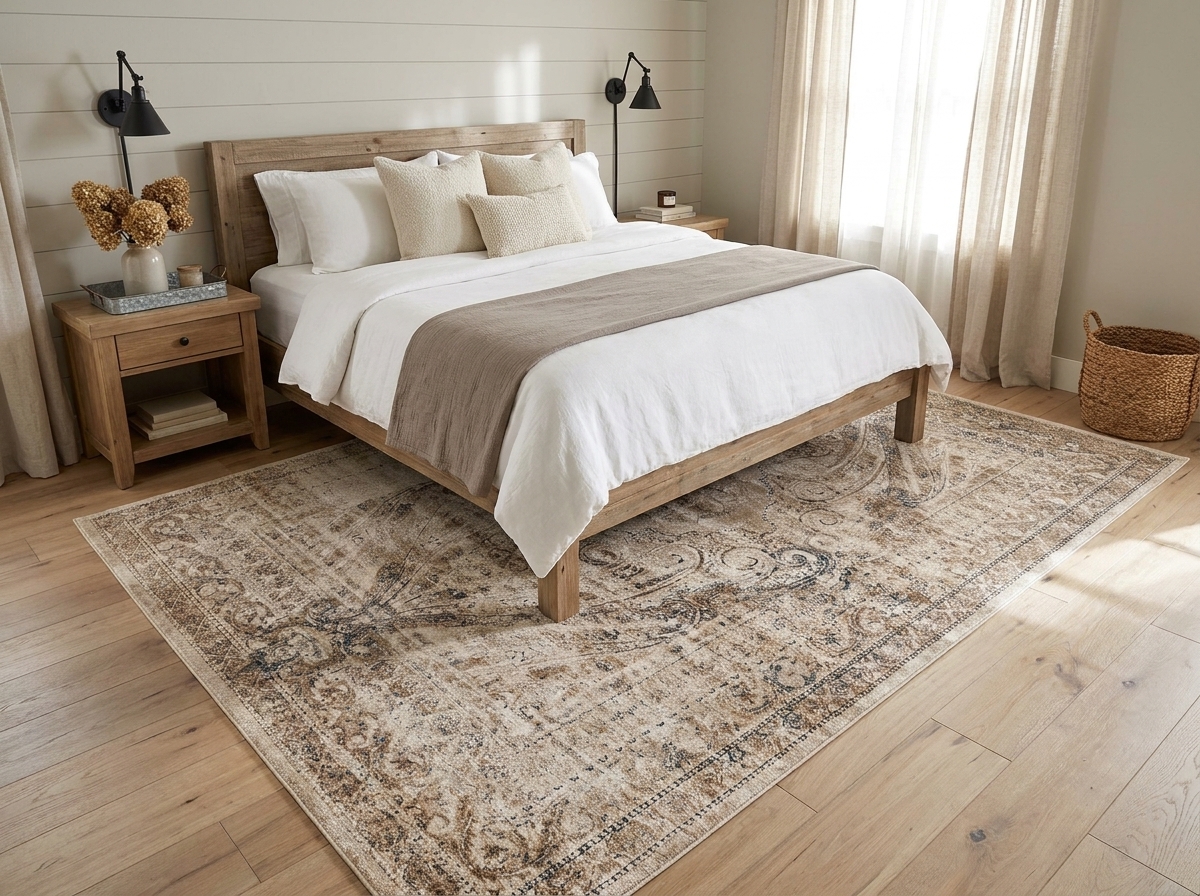
Farmhouse style has only gotten more popular over the last decade, and it shows no signs of slowing down. It takes the comfort of a lived-in, generations-old home and makes it feel fresh again – worn wood, soft neutrals, a little bit of pattern, nothing trying too hard.
A farmhouse rug is usually what grounds the whole look. More than any other piece, it sets the tone between cozy-casual and rustic-elegant, and the right one makes a room feel collected rather than staged.
Here’s how to choose, place, and style a farmhouse rug so your space feels warm and welcoming instead of themed.
What Makes a Rug “Farmhouse”
Farmhouse rugs borrow from American country style, vintage textiles, and natural, hand-crafted materials. A few traits show up again and again:
- Soft, muted color palettes – cream, oatmeal, soft gray, faded black, and muted red or blue
- Classic patterns – checkered prints like buffalo check and gingham, ticking stripes, and simple geometric prints
- Natural, textural materials – jute, cotton, wool, and braided construction are all farmhouse staples
- A worn-in, vintage-inspired look – even new farmhouse rugs are often designed to look a little faded or weathered
- Simple, uncomplicated design – farmhouse rugs rarely have ornate or busy patterns; they lean toward clean, graphic, or solid designs
If a rug looks like it could have come from a hundred-year-old farmhouse kitchen or a well-loved front porch, it’s probably farmhouse.
The Most Popular Farmhouse Rug Styles
Buffalo Check and Gingham Rugs – Bold black-and-cream or red-and-cream checkered patterns are some of the most recognizable farmhouse prints. They read as graphic and modern while still feeling classic and homey.
Braided Rugs – Braided jute and braided wool rugs are a true farmhouse staple, prized for their texture and durability. They were traditionally made from scraps of fabric, so a slightly imperfect, handmade look is part of the appeal.
Ticking Stripe Rugs – Thin, even stripes in navy, black, or red on a cream background, borrowed from vintage ticking fabric. A simple way to add pattern without competing with busier farmhouse textiles.
Natural Fiber Rugs – Jute, sisal, and cotton rugs are the neutral backbone of farmhouse style, often used as a base layer under a smaller patterned rug.
Vintage and Distressed Rugs – Faded, vintage-look rugs, whether genuinely old or designed to look that way, bring instant warmth and history to a farmhouse room.
How to Choose a Farmhouse Rug for Your Space
Farmhouse style is forgiving, but a few choices make the difference between cozy and cluttered.
Keep the palette simple. Most farmhouse rooms stick to two or three colors at most, usually a neutral base of cream, oatmeal, or gray, with one accent color like black, navy, or red. A rug in a bright or unusual color will pull the room out of the farmhouse look.
Let texture do some of the work pattern can’t. Farmhouse style leans on texture, nubby wool, slubby cotton, chunky braids, as much as it leans on pattern. A plain solid rug in a textural weave can look just as farmhouse as a checkered one.
Mix pattern scales. If your furniture or walls already have pattern (shiplap, beadboard, gingham curtains), choose a rug in a simpler stripe or solid. If the room is mostly neutral, a buffalo check or ticking stripe rug can be the main pattern.
Don’t be afraid of a little wear. Farmhouse style is meant to look lived-in. A rug that fades a bit over time or shows light wear actually suits the style better than something that stays pristine.
Mixing Farmhouse with Modern Rooms
Modern farmhouse, clean lines and minimal decor paired with warm, rustic textures, is one of the most popular interior styles going right now. A farmhouse rug is often the easiest way to bring that warmth into an otherwise streamlined room.
A few ways to make the mix work:
Pair a textural neutral rug with simple furniture. A jute or braided rug under clean-lined modern furniture adds warmth without adding visual clutter.
Use pattern sparingly. One checkered or striped rug is usually enough. Let it be the room’s one clearly “farmhouse” element, and keep everything else simple and modern.
Lean on wood tones to tie it together. Farmhouse rugs look most at home with a mix of light and dark wood, which is also a staple of modern farmhouse rooms.
Room-by-Room Farmhouse Rug Styling
Kitchen
The kitchen might be the single most common place for a farmhouse rug. A durable, flat or low-pile rug in front of the sink or stove holds up to spills and foot traffic better than a plush pile. Runners in a ticking stripe or buffalo check are a classic farmhouse kitchen choice.
Living Room
A large neutral jute or wool rug anchors a farmhouse living room beautifully, especially layered with a smaller patterned rug or a few well-worn textiles. Follow standard sizing: front legs of the sofa and chairs should sit on the rug, with 8 to 12 inches of rug extending past the furniture.
Entryway and Mudroom
Entryways and mudrooms take the most wear in a farmhouse home, so durability matters as much as looks. A braided or flatweave runner in a classic stripe or check hides dirt well and holds up to boots, paws, and daily traffic.
Bedroom
A softer farmhouse rug, think wool or a plush natural fiber blend, works well in the bedroom. Place it under the lower two-thirds of the bed, extending past the foot and sides, so it’s the first thing underfoot in the morning.
Colors That Work Especially Well
If you’re building a room around a farmhouse rug and want a reliable starting palette, these combinations consistently work:
Cream and black – the classic buffalo check palette. Graphic, timeless, and easy to build a room around.
Oatmeal and natural – the all-neutral jute and cotton look. Relies on texture more than color.
Cream, navy, and red – the ticking stripe palette. A little more traditional and nautical-adjacent.
Faded gray and white – a softer, more modern farmhouse palette that leans into the vintage, worn-in look.
The Bottom Line
A farmhouse rug does a lot of quiet work in a room. It’s rarely the flashiest piece, but it’s often what makes a space feel warm, textured, and lived-in rather than new and untouched. Keep the palette simple, lean on natural materials and texture, and don’t be afraid of a little wear.
Farmhouse style rewards comfort over perfection. Choose a rug that feels like it already belongs, and the rest of the room will follow.
About Rugs.com
Rugs.com is a one-stop online rug shop for all your floor covering needs. With over 100,000 rug designs, the extensive selection of indoor and outdoor rugs offers a wide variety of shapes, styles, and textures – perfect for every season of the year and season of life. With more than 60 years of experience in hand-knotted and machine-woven rugs, the family-owned and operated business believes that “Beneath Every Moment” – whether it is a baby’s first step, a first dance, or a cherished memory – there should be a beautiful rug. Helping shoppers find the perfect foundation for life’s moments, Rugs.com is making online shopping simple with the lowest possible prices, fast and free shipping every day, award-winning customer support, and a 30-day free return policy. Rugs.com ships millions of rugs nationwide from the company’s South Carolina and California warehouses. Learn more at www.rugs.com.