How to Style a Mid-Century Modern Rug: A Complete Guide
Mid-century modern has been the most quietly influential design style of the last two decades. It started as a 1950s and ’60s movement, got rediscovered in the early 2000s, and has stayed in style longer than almost any other look because it does something rare – it feels both nostalgic and current at the same time.
The rug is one of the most important pieces in a mid-century room. The furniture tends to be low, lean, and warm-toned, with lots of exposed wood and tapered legs. A good rug grounds that furniture, adds the color and pattern the clean-lined pieces don’t, and ties the whole room to the era it’s referencing without making it feel like a museum.
Here’s how to choose and style a mid-century modern rug so your space feels era-appropriate without feeling like a theme party.
What Makes a Rug “Mid-Century Modern”
Mid-century modern design borrowed from Scandinavian minimalism, Danish craftsmanship, and American optimism of the postwar years. The rugs of the era reflected all three – simple geometric patterns, warm earthy colors, and a lot of texture.
Most mid-century rugs share a few traits:
- Geometric or abstract patterns – think atomic shapes, starbursts, diamonds, bold stripes, or organic abstract forms
- Warm, saturated color palettes – mustard, olive, burnt orange, teal, warm brown, cream, deep red
- Pile with character – shag was huge in the era, but so were flatweaves and low-pile wool
- Clean, graphic design – patterns feel designed and deliberate rather than ornate or traditional
- A sense of movement – mid-century patterns often have asymmetry, repetition, or motion built into them
The era’s aesthetic was optimistic and forward-looking. The rugs reflect that – they feel confident and a little playful, not fussy or formal.
The Most Popular Mid-Century Rug Styles
A handful of specific rug types show up again and again in mid-century rooms.
Shag rugs. The quintessential mid-century rug. Long, soft pile in cream, warm gray, mustard, burnt orange, or olive. Shag became a mid-century signature in the 1960s and has had multiple revivals since. A modern shag in a warm neutral works in almost any mid-century space.
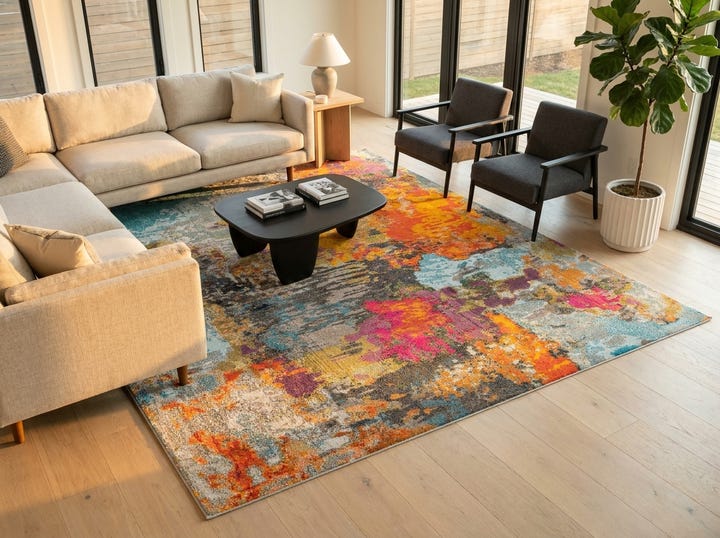
Abstract and atomic-pattern rugs. Geometric prints inspired by the atomic age – starbursts, boomerangs, molecular shapes. These are the boldest mid-century rugs and work best in rooms with simpler furniture.
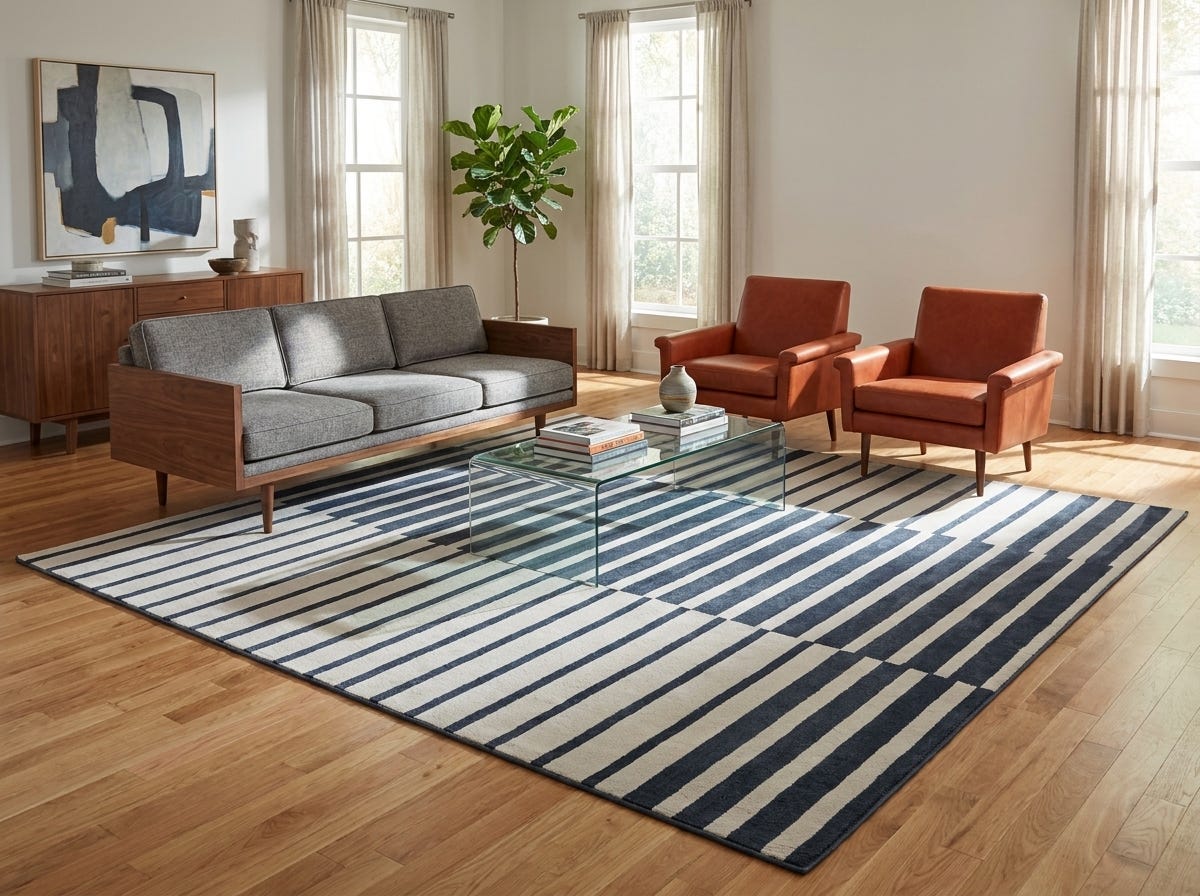
Scandinavian-style flatweaves. Mid-century modern pulled heavily from Scandinavian design. Simple striped flatweaves, two-tone geometric patterns, and low-contrast tonal rugs all read as mid-century even though they’re also at home in modern Scandinavian spaces.
Vintage Moroccan rugs. Beni Ourain rugs – cream backgrounds with simple black diamond patterns – were imported heavily during the mid-century era and became closely associated with the look. They still work beautifully in mid-century rooms today.
Bold striped rugs. Simple two- or three-color stripes in warm palettes. Easy to shop for, hard to get wrong, and quietly mid-century.
How to Choose a Mid-Century Modern Rug
Mid-century has a specific look, which means a few decisions matter more than they do in more flexible styles like boho.
Lean into warmth. Mid-century rooms almost always skew warm – warm wood, warm leather, warm wall colors. The rug should match that temperature. Mustard, olive, burnt orange, warm cream, and deep red all work. Cool grays, bright whites, and cool blues feel out of era.
Choose pattern that feels designed. Mid-century patterns are intentional and graphic. Avoid overly traditional patterns (Persian medallions, floral designs, Victorian ornamentation) and avoid very busy or layered patterns. Clean geometry, bold stripes, and abstract shapes are your friends.
Don’t ignore texture. A low-pile wool flatweave reads very differently from a shag – both work in mid-century rooms, but they create very different moods. Shag feels cozy and nostalgic; flatweave feels sharper and more Scandinavian.
Think about scale. Mid-century furniture tends to be low and lean, with lots of air underneath. A rug that’s too thick (like a very high-pile shag) can swallow those furniture legs and ruin the clean silhouette that defines the style. If you want the softness of shag, keep the pile shorter than the leg clearance of your furniture.
Era-appropriate colors age well. Mustard, olive, burnt orange, teal, and warm brown are the colors most associated with mid-century modern. They’re also having a sustained design moment, which means a rug in these colors won’t look dated – it’ll look intentional.
Room-by-Room Mid-Century Modern Rug Styling
Living Room
The living room is where mid-century modern really sings. Low-slung sofas with tapered wooden legs, a statement coffee table, a few iconic chairs – this is the setting mid-century was designed for.
Start with a warm-toned rug that complements your wood tones. If your furniture has strong walnut or teak legs, a cream, mustard, or olive rug lets the wood shine. If your furniture is lighter oak, you can go deeper with the rug – burnt orange, deep teal, or a bolder pattern.
Follow standard living room sizing: front legs of your sofa and chairs should sit on the rug. Mid-century furniture often has visible, beautiful legs – don’t buy a rug so big that you hide them entirely under furniture. The legs are part of the aesthetic.
Bedroom
Mid-century bedrooms call for a rug that’s soft underfoot and warm in tone. This is one of the best places to use a shag or high-pile rug – it adds the coziness the clean-lined furniture doesn’t.
A cream, warm gray, or mustard shag placed under the lower two-thirds of the bed is a classic move. For a more Scandinavian-leaning take, a simple low-pile wool flatweave in a tonal pattern works beautifully.
If you have a platform bed with low profile, be especially careful about pile height – a thick shag can overwhelm the bed’s clean lines.
Dining Room
Mid-century dining rooms benefit from flatweaves or low-pile patterned rugs. Chairs need to slide smoothly, and high pile under a dining table is a maintenance headache.
A Scandinavian-style striped flatweave or a geometric low-pile rug in warm tones works well. Follow the standard rule: at least 24 inches of rug past all sides of the table.
Home Office
A home office is a great place to use a bolder mid-century rug – a graphic geometric or an atomic-pattern piece. Because the room is smaller and the furniture simpler, you can let the rug carry more of the design weight than you could in a larger room.
Keep the pile low so your chair rolls easily.
Mid-Century vs. Modern vs. Boho
If you’ve read the modern and boho style guides, you may be wondering where mid-century fits. The three styles overlap but have real differences, and the rug is often where you see them.
Modern is restrained, cool-leaning, and often minimalist. Solid rugs, subtle patterns, neutral palettes.
Boho is layered, warm, and pattern-forward. Vintage pieces, bold color, Moroccan and Persian rugs.
Mid-century sits between them – warmer than modern, more graphic than boho, more era-specific than either. Geometric patterns, warm earthy palettes, shag or clean flatweaves.
A room with a Moroccan Beni Ourain rug, walnut furniture, and a mustard throw pillow is mid-century. The same room with the Moroccan rug layered over a jute base and a pile of patterned pillows becomes boho. The same room with a plain cream wool rug and clean black-and-white art becomes modern.
The rug alone doesn’t decide the style – but it’s the single piece that most clearly tells you which direction a room is heading.
Colors That Work Especially Well in Mid-Century Modern Rooms
If you’re building a mid-century space from scratch and want a starting palette:
- Mustard, cream, and walnut – the most iconic mid-century palette. Warm, inviting, works with almost any mid-century furniture.
- Burnt orange, olive, and warm cream – the deeper, moodier version. Great for dens, offices, and masculine-leaning rooms.
- Teal, cream, and warm brown – adds coolness without losing warmth. Works beautifully with teak furniture.
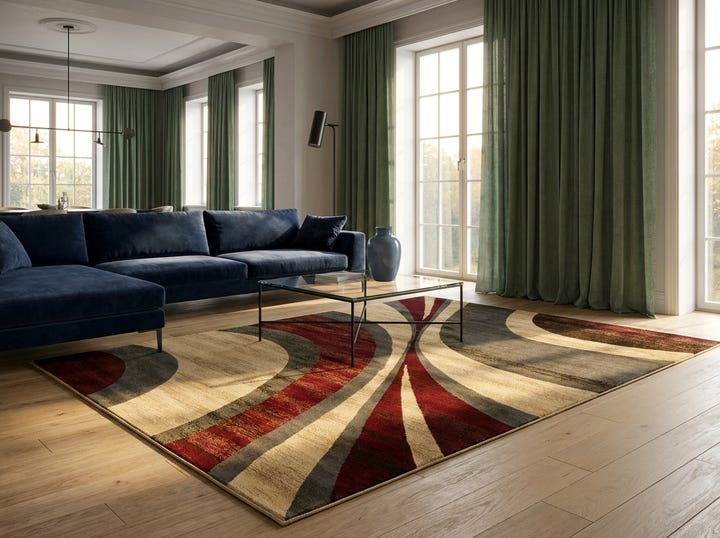
- Deep red, cream, and black – the Danish-inspired palette. Graphic and striking.
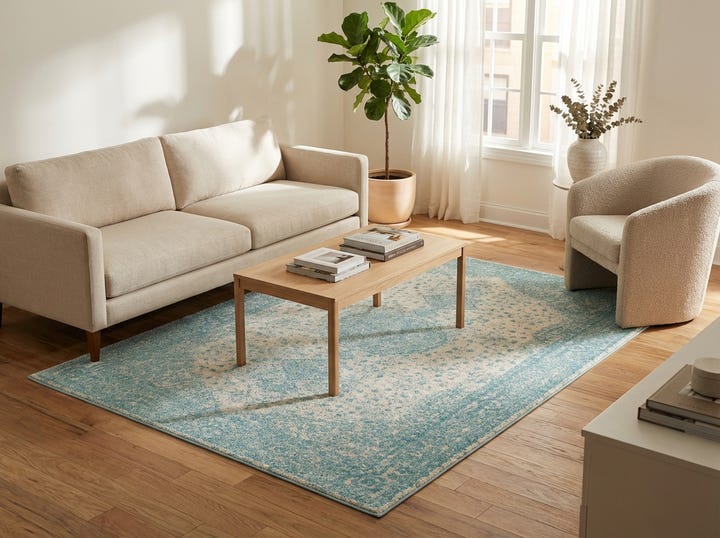
- Cream, warm gray, and natural wood – the Scandinavian mid-century take. Softer and lighter than the other palettes.
Where Mid-Century Modern Can Go Wrong
A few traps worth avoiding.
Trying too hard. A room with a shag rug, a starburst clock, a kidney-shaped coffee table, and three Eames chairs doesn’t look mid-century – it looks like a set. One or two era-defining pieces per room is plenty. Let everything else be quieter.
Choosing the wrong era-adjacent pattern. Not every geometric pattern is mid-century. Art Deco geometrics, 1980s postmodern patterns, and contemporary abstract designs all look different and read differently. If you want authentic mid-century, stick to patterns from the era or genuine reproductions of them.
Cool palettes. Mid-century modern was warm. A rug in cool gray with cool blue tones can work in a modern room, but it will fight a mid-century one. Stay warm.
Oversized shag. Shag was mid-century, but there’s a difference between a well-chosen vintage-style shag and a massive, puffy modern shag that feels more early-2000s than mid-century. Keep the pile reasonable.
The Bottom Line
A mid-century modern rug does one thing better than almost any other style: it adds warmth and pattern without clutter. In rooms built around clean furniture lines and exposed wood, the rug is often the only piece that can carry real color and design – and that gives it more responsibility than it would have in a more decorated space.
Lean warm. Choose patterns that feel designed rather than ornate. Pay attention to pile height so you don’t hide the furniture that defines the style. And trust the era’s palette – mustard, olive, burnt orange, and warm cream earned their status for a reason.
Mid-century modern isn’t nostalgia. It’s a design language that still works because the people who created it got the fundamentals right. A well-chosen rug is how you tap into that without turning your room into a time capsule.
About Rugs.com
Rugs.com is a one-stop online rug shop for all your floor covering needs. With over 100,000 rug designs, the extensive selection of indoor and outdoor rugs offers a wide variety of shapes, styles, and textures – perfect for every season of the year and season of life. With more than 60 years of experience in hand-knotted and machine-woven rugs, the family-owned and operated business believes that “Beneath Every Moment” – whether it is a baby’s first step, a first dance, or a cherished memory – there should be a beautiful rug. Helping shoppers find the perfect foundation for life’s moments, Rugs.com is making online shopping simple with the lowest possible prices, fast and free shipping every day, award-winning customer support, and a 30-day free return policy. Rugs.com ships millions of rugs nationwide from the company’s South Carolina and California warehouses. Learn more at www.rugs.com.