The Forgotten Fifth Wall: Why Designers Think About Floors Differently
When people design a room, they usually think about four surfaces:
- The walls
- The ceiling
- The windows
- The furniture filling the space
But great designers think about one more surface that most people completely overlook:
The floor
In fact, many designers consider the floor to be the “fifth wall.”
And once you understand why, you’ll never look at rugs – or room design – the same way again.
Most People Decorate From Eye Level Up
This is the most common design mistake.
People focus on:
- Paint colors
- Art
- Lighting
- Sofas and decor
Meanwhile, the largest uninterrupted surface in the room – the floor – gets treated as an afterthought.
The result?
Rooms that technically look “finished”… but still feel incomplete.
Floors Quietly Control How a Room Feels
Even though we don’t consciously stare at the floor, it affects us constantly.
The floor influences:
- Warmth
- Brightness
- Acoustics
- Comfort
- Movement
- Spatial perception
And because it spans the entire room, it has enormous visual power.
Why Designers Call It the “Fifth Wall”
Walls define the perimeter of a room.
But floors define the experience of the room.
Designers understand that flooring isn’t just functional – it’s architectural.
A rug, in particular, changes:
- How furniture relates to each other
- How light moves through the space
- How “grounded” the room feels
In many cases, the floor determines whether a room feels cohesive or chaotic.
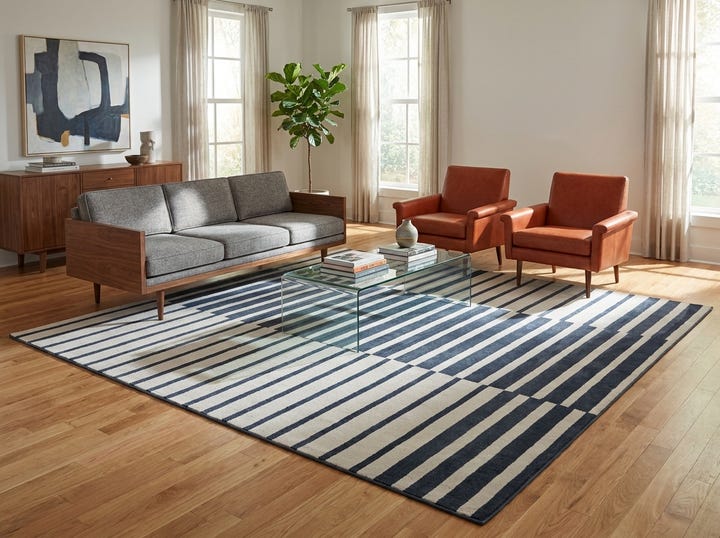
Rugs Create Visual Architecture
Think of a rug as more than decoration.
It’s:
- A foundation
- A boundary
- A visual frame
Without a rug, furniture can feel like it’s floating randomly in space.
With a rug:
- Seating becomes a defined area
- Movement feels intentional
- The room gains structure
Floors Affect Emotion More Than You Realize
Hard, bare floors often feel:
- Colder
- Louder
- More sterile
Soft surfaces create the opposite effect:
- Warmth
- Calmness
- Psychological comfort
That’s why luxury hotels, high-end lounges, and thoughtfully designed homes almost always pay close attention to flooring and rugs.
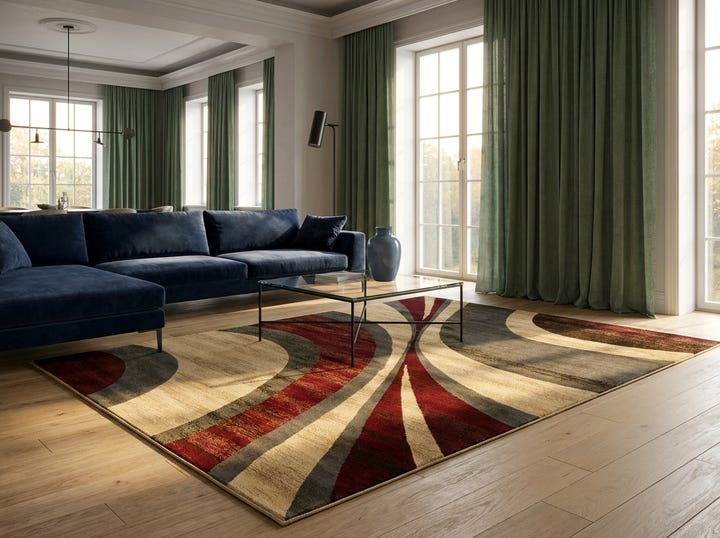
The Floor Is the Largest “Color Block” in the Room
Most people don’t realize how much color influence the floor has.
A rug can:
- Brighten a room
- Darken a room
- Add warmth
- Create contrast
- Change perceived room size
Because it covers such a large surface area, it visually impacts the room just as much as wall paint – sometimes more.
Why Rooms Without Rugs Often Feel Unfinished
Even beautifully furnished rooms can feel:
- Echoey
- Empty
- Disconnected
Often, the missing piece is floor definition.
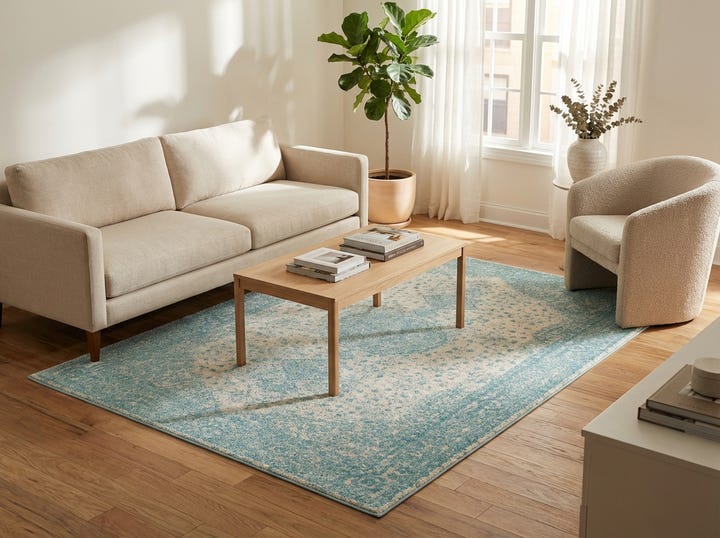
A rug visually “completes” a room because it:
- Anchors furniture
- Softens hard surfaces
- Adds texture and depth
Without it, the space can feel temporary or incomplete.
Designers Use Floors to Guide Movement
Great design isn’t static – it guides how people move through a room.
Rugs subtly influence:
- Where people walk
- Where they gather
- Where conversation happens
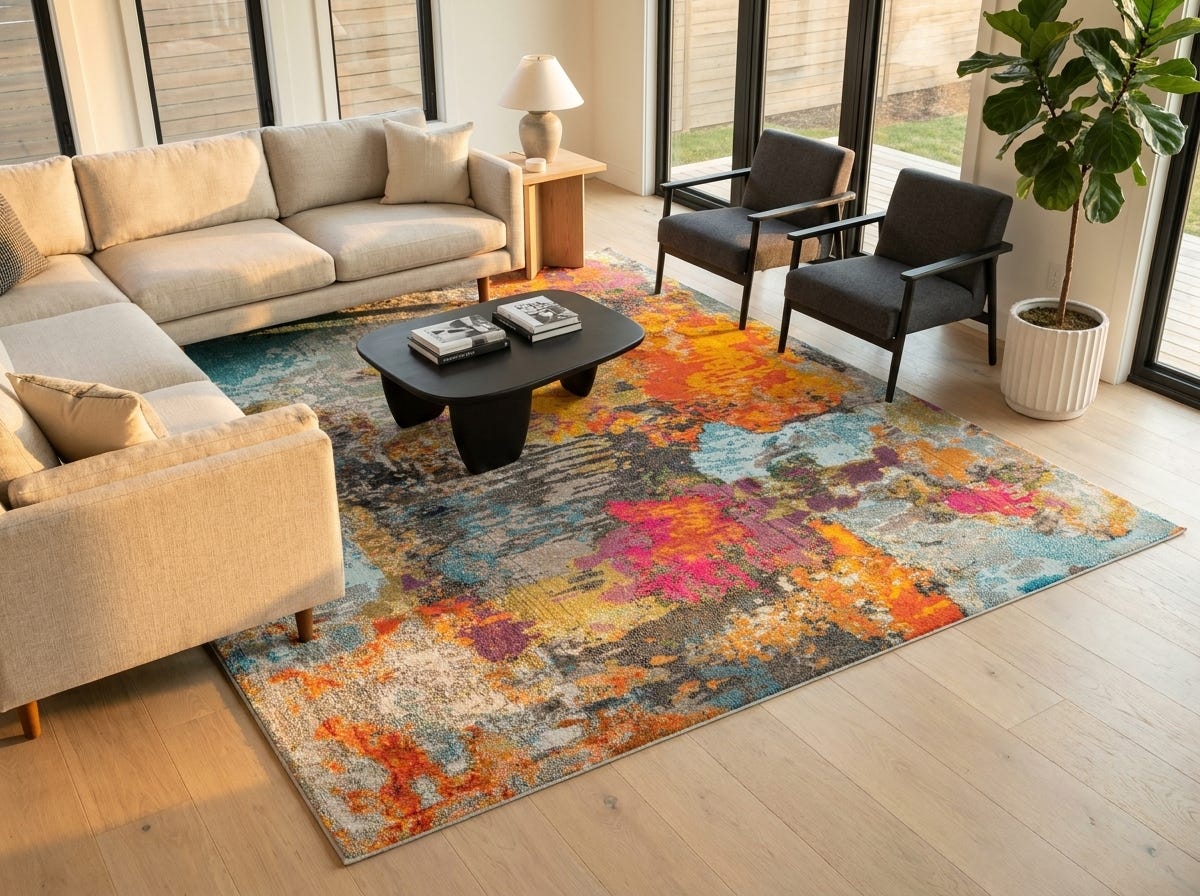
In open floor plans especially, rugs act like invisible walls:
- Defining zones
- Separating functions
- Creating order without physical barriers
Texture Starts From the Ground Up
One reason designer spaces feel layered and rich is because they mix textures intentionally.
And the floor is often where that layering begins.
Example:
- Smooth wood floors
- Soft wool rug
- Linen sofa
- Leather chair
The contrast creates warmth and visual depth.
The “Bare Floor” Trend Isn’t Always Better
Modern design trends often celebrate:
- Minimalism
- Open spaces
- Bare hardwood floors
But too much exposed flooring can make spaces feel:
- Cold
- Loud
- Uninviting
This is why many minimalist spaces still include rugs:
To soften the environment without adding clutter.
Rugs Change How a Room Sounds
The floor doesn’t just affect visuals – it affects acoustics too.
Hard surfaces reflect sound, creating:
- Echo
- Sharpness
- A less intimate feeling
Rugs absorb sound and create:
- Softer acoustics
- More warmth
- A quieter atmosphere
This is one reason rooms with rugs often feel more relaxing – even before you consciously notice why.
The Best Rooms Feel Grounded
One thing almost all great interiors have in common:
They feel grounded.
Not visually chaotic.
Not disconnected.
Grounded.
And that feeling usually starts from the floor up.
Final Thoughts
Most people think of rugs as accessories.
Designers think of them as architecture.
Because the floor isn’t just a surface you walk on – it’s one of the biggest factors shaping how a room feels, functions, and flows.
The next time a room feels unfinished, uncomfortable, or slightly off…
Don’t just look at the walls.
Look down.
Key Takeaways
- Designers often think of the floor as the “fifth wall”
- Rugs help define structure, movement, and mood
- Floors influence comfort, acoustics, and spatial perception
- A rug can visually complete a room
- Great design starts from the ground up – not just eye level
The most important surface in your room might be the one you’ve been ignoring the entire time.
About Rugs.com
Rugs.com is a one-stop online rug shop for all your floor covering needs. With over 100,000 rug designs, the extensive selection of indoor and outdoor rugs offers a wide variety of shapes, styles, and textures – perfect for every season of the year and season of life. With more than 60 years of experience in hand-knotted and machine-woven rugs, the family-owned and operated business believes that “Beneath Every Moment” – whether it is a baby’s first step, a first dance, or a cherished memory – there should be a beautiful rug. Helping shoppers find the perfect foundation for life’s moments, Rugs.com is making online shopping simple with the lowest possible prices, fast and free shipping every day, award-winning customer support, and a 30-day free return policy. Rugs.com ships millions of rugs nationwide from the company’s South Carolina and California warehouses. Learn more at www.rugs.com.