
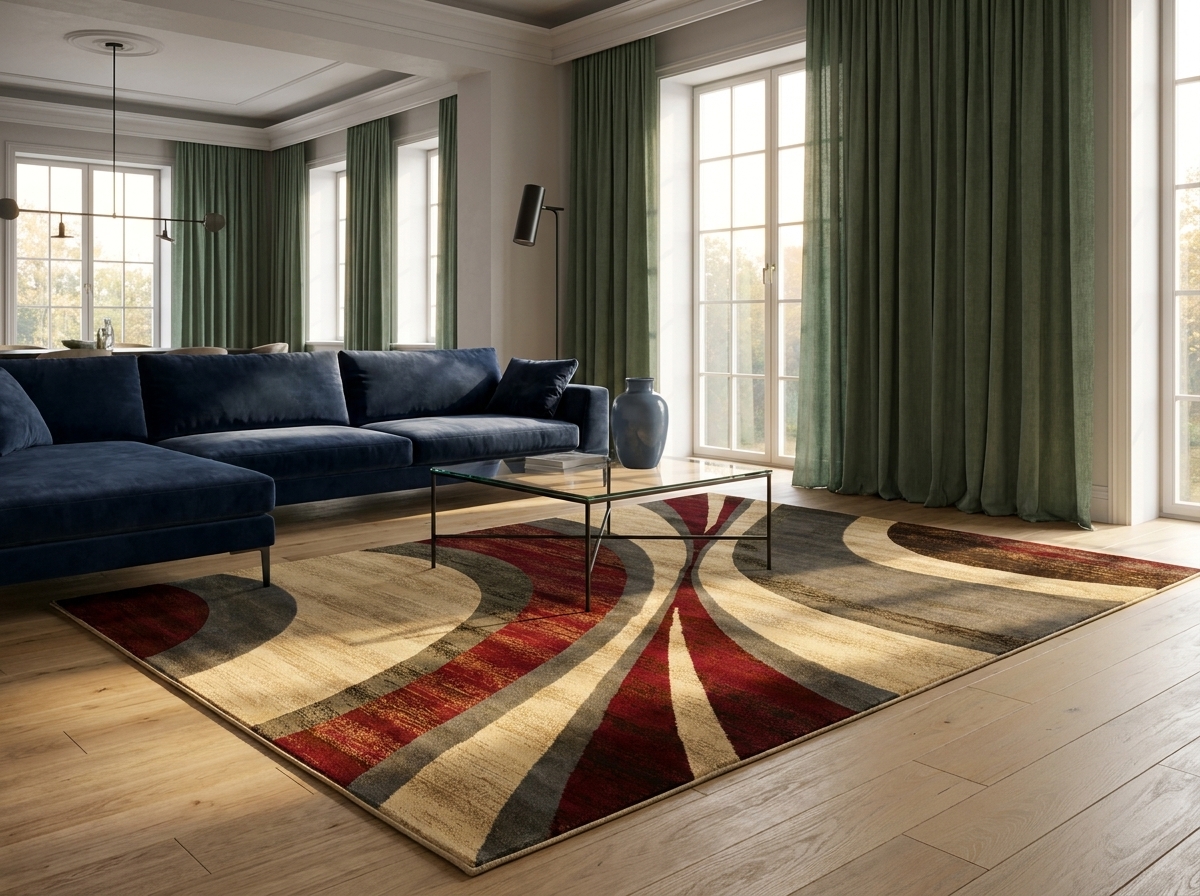
For years, decorating advice has sounded something like this:
– Match your rug to your curtains.
– Match your rug to your sofa.
– Match your rug to your pillows.
The goal? A perfectly coordinated room.
But here’s the problem:
Rooms where everything matches often feel flat, predictable, and strangely lifeless.
That’s why many interior designers intentionally don’t match rugs to decor.
Instead, they use rugs to create contrast, tension, and personality.
Here’s why matching your rug too closely to your decor is overrated – and what to do instead.
The “Matching Everything” Trap
At first, matching sounds like a safe choice.
You assume:
- Everything will feel cohesive
- The room will look polished
- You can’t go wrong
But overly matched rooms often end up feeling:
- Generic
- Overdesigned
- Like a furniture showroom instead of a real home
When everything blends together, nothing stands out.
Great Rooms Need Contrast
The most visually interesting spaces usually contain:
- Different textures
- Varied tones
- Unexpected combinations
A rug can be the element that introduces that contrast.
Instead of matching everything perfectly, a rug can:
- Break up repetition
- Add depth
- Create visual energy
Why Designers Rarely Match Rugs Exactly
Interior designers typically think in terms of:
- Balance
- Layering
- Mood
– not exact coordination.
That’s because a rug has a different role than furniture or wall color.
It sits across a large visual surface, meaning it can:
- Ground the room
- Add movement
- Shift the emotional tone of the space
If it perfectly matches everything else, it often disappears.
The Problem With “Safe” Rug Choices
A common mistake is choosing a rug that’s:
- The same color as the sofa
- The same tone as the walls
- Too neutral to stand out
The result:
The room may feel “fine”… but also forgettable.
There’s no focal point.
No contrast.
No visual rhythm.
Rugs Work Better as a Counterbalance
Think of your rug less like a matching accessory – and more like a balancing element.
Example:
If your furniture is:
- Smooth
- Neutral
- Minimal
A textured or patterned rug adds warmth and character.
Another example:
If your room already has:
- Bold art
- Colorful furniture
- Strong patterns
A quieter rug can calm the space down.
Great design is about balance – not duplication.
Matching Can Actually Make Rooms Feel Smaller
When everything shares the same tone or color family, rooms can visually flatten.
A contrasting rug helps:
- Define the floor plane
- Add dimension
- Separate furniture from flooring
This creates more depth and makes spaces feel more dynamic.
What Designers Do Instead of Matching
1. They Repeat Tones – Not Exact Colors
Instead of matching perfectly, they echo tones subtly.
Example:
- Warm wood floors
- Rust-colored accent in the rug
- Neutral sofa
Connected, but not identical.
2. They Mix Textures
A room with:
- Leather seating
- Linen curtains
- Wool rug
Feels layered and lived-in.
Even if the colors are simple.
3. They Use Rugs to Introduce Personality
Sometimes the rug becomes:
- The boldest item in the room
- The most artistic piece
- The thing that makes the space memorable
When Matching Does Work
Matching isn’t always wrong.
It can work well in:
- Very minimalist spaces
- Formal interiors
- Monochromatic design styles
But even then, designers usually vary:
- Texture
- Shade
- Pattern scale
Exact matching is rare.
A Better Rule: Coordinate, Don’t Match
Instead of asking:
“Does this rug match my room?”
Ask:
“Does this rug add something my room needs?”
Maybe that’s:
- Warmth
- Texture
- Contrast
- Energy
- Softness
That’s a much more useful design approach.
Easy Ways to Create a More Interesting Room
Try:
- A patterned rug with solid furniture
- A darker rug in a light room
- A vintage-style rug in a modern space
- Natural textures mixed with sleek surfaces
The goal is visual balance – not uniformity.
The Most Memorable Rooms Usually Break the Rules
Think about rooms that feel:
- Stylish
- Personal
- Effortless
They rarely look perfectly matched.
Instead, they feel:
- Collected over time
- Layered naturally
- Slightly unexpected
And rugs often play a huge role in that feeling.
Final Thoughts
Matching your rug to your decor might feel like the safe choice.
But safe design often creates forgettable rooms.
A rug doesn’t have to blend in perfectly to work beautifully. In fact, sometimes the best rug is the one that adds contrast, tension, or personality your room didn’t know it needed.
Key Takeaways
- Perfectly matched rooms can feel flat and lifeless
- Rugs work best when they create balance, not duplication
- Designers prioritize contrast, texture, and layering
- Coordinating tones is better than exact matching
- A rug should add something new to the space – not disappear into it
If your room feels polished – but still lacks personality –
Your rug may be matching a little too well.
About Rugs.comRugs.com is a one-stop online rug shop for all your floor covering needs. With over 100,000 rug designs, the extensive selection of indoor and outdoor rugs offers a wide variety of shapes, styles, and textures – perfect for every season of the year and season of life. With more than 60 years of experience in hand-knotted and machine-woven rugs, the family-owned and operated business believes that “Beneath Every Moment” – whether it is a baby’s first step, a first dance, or a cherished memory – there should be a beautiful rug. Helping shoppers find the perfect foundation for life’s moments, Rugs.com is making online shopping simple with the lowest possible prices, fast and free shipping every day, award-winning customer support, and a 30-day free return policy. Rugs.com ships millions of rugs nationwide from the company’s South Carolina and California warehouses. Learn more at www.rugs.com.