What Size Rug Do I Need? The Complete Rug Size Guide for Every Room
Choosing the right rug size is the single most important decision you’ll make when shopping for a rug. Get it right, and the whole room comes together – furniture feels grounded, the space looks intentional, and everything flows. Get it wrong, and even the most beautiful rug can make a room feel awkward, cramped, or unfinished.
The frustrating part? Most people don’t know they’ve bought the wrong size until the rug is unrolled in their living room.
While Rugs.com offers Free Returns, this guide will walk you through everything you need to know to get the size right the first time – the standard rug sizes, how to measure your space, and exactly what size works best for each room in your home.
Standard Rug Sizes
Rugs come in a handful of standard sizes that fit most spaces. Knowing these makes shopping much easier:
- 3′ x 5′ – Small accent rug, best for entryways, kitchens, and bedside placement
- 4′ x 6′ – Slightly larger accent size, good for small seating areas or reading nooks
- 5′ x 8′ – The most versatile size, works in small living rooms, bedrooms, and dining nooks
- 6′ x 9′ – A step up for medium living rooms and standard bedrooms
- 8′ x 10′ – The go-to size for most living rooms and dining rooms
- 9′ x 12′ – Large living rooms, big dining rooms, and open floor plans
- 10′ x 14′ – Extra-large living rooms and great rooms
- 12′ x 15′ and up – Oversized spaces, open-concept homes, and grand rooms
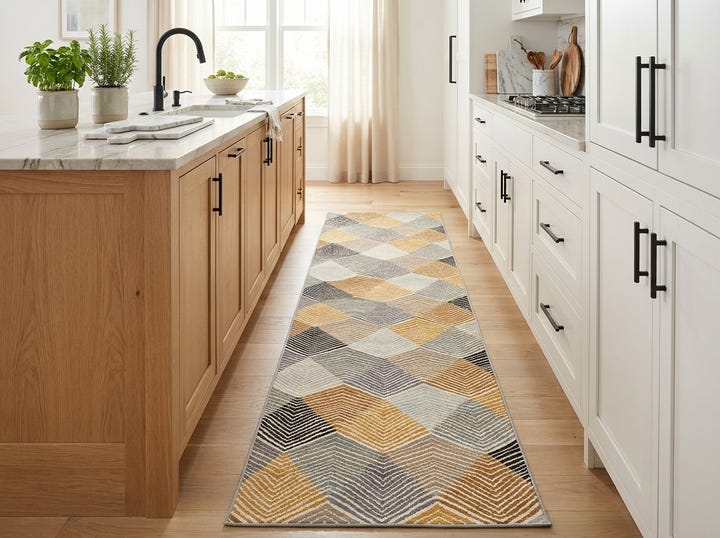
Runners are typically 2′ x 6′, 2′ x 8′, or 2.5′ x 10′ and are used in hallways, kitchens, and alongside beds.
Round rugs usually come in 4′, 5′, 6′, 7′, and 8′ diameters and work best under round dining tables or as accent pieces in reading corners.
How to Measure for a Rug
Grab a tape measure and note the length and width of the room. Then measure the area where you actually want the rug to sit – usually defined by your furniture layout, not the whole room. Mark the corners of your ideal rug placement with painter’s tape on the floor. Step back and look at it. If it feels too small, size up. If it crowds the walls, size down.
A good rule of thumb: leave 8 to 24 inches of bare floor between the edge of the rug and the wall. That border is what makes the rug look intentional instead of like wall-to-wall carpet.
Rug Size by Room
Here’s exactly what size to choose for each room, and how to place it once it arrives.
Living Room
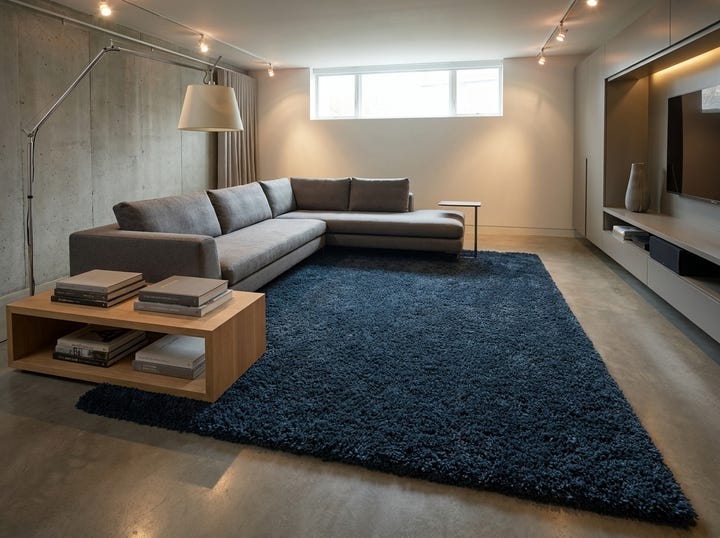
The living room is where rug sizing matters most, because the rug defines the seating area. There are three common approaches:
All furniture on the rug. This is the most polished look. Every leg of every piece of furniture sits on the rug, with 8 to 12 inches of rug extending past the furniture on all sides. For most living rooms this means a 9′ x 12′ or larger.
Front legs on the rug. The most popular approach for medium living rooms. The front legs of the sofa and chairs sit on the rug; the back legs stay on the floor. This visually connects the furniture without requiring an enormous rug. An 8′ x 10′ works for most rooms.
Coffee table only. For smaller living rooms or apartments. The rug sits under the coffee table with all furniture off it. A 5′ x 8′ or 6′ x 9′ is usually right – but be careful, this look can feel disconnected if the rug is too small.
The most common mistake: buying a rug that’s too small. If your rug is floating in the middle of the room with a big gap between it and your furniture, size up.
Bedroom
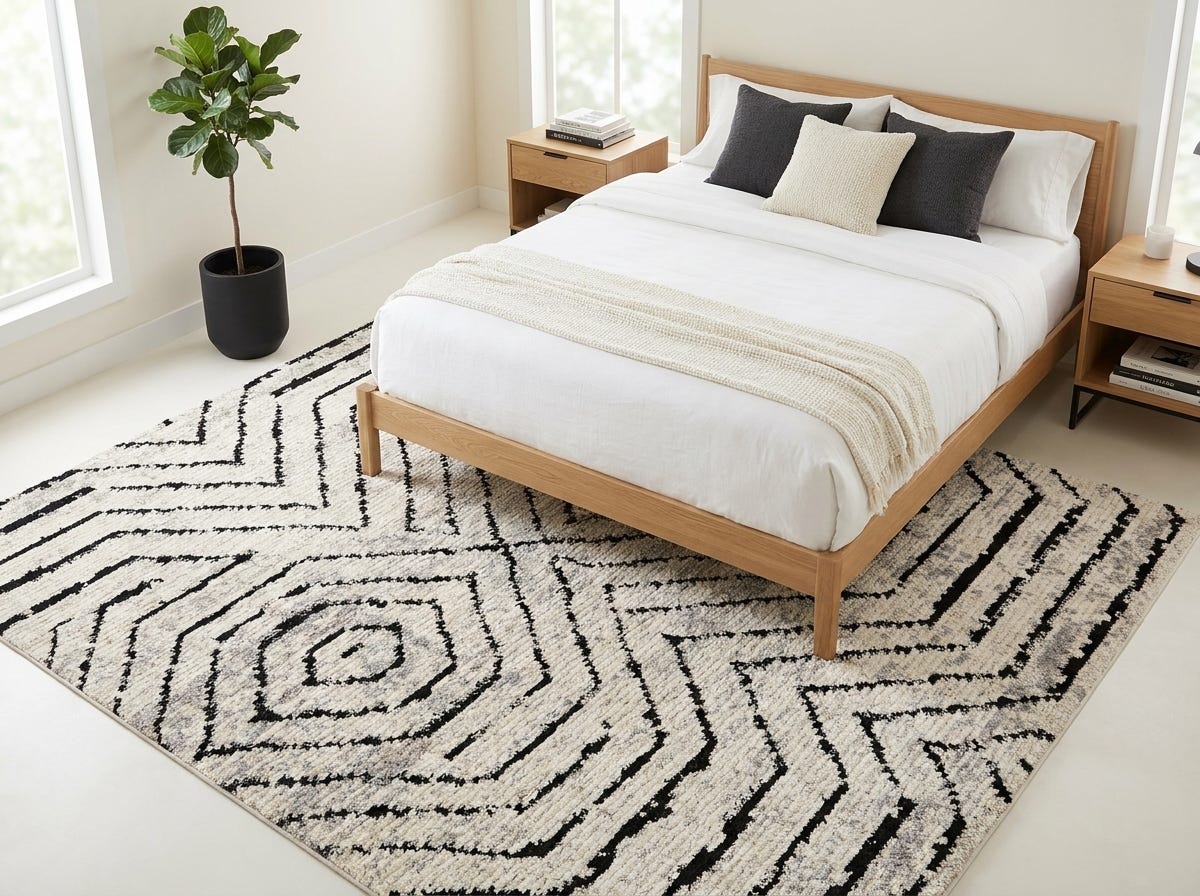
Bedroom rug sizing is all about proportion to the bed.
- King bed – Use a 9′ x 12′ rug centered under the bed with roughly 2 feet of rug extending on each side and at the foot
- Queen bed – Use an 8′ x 10′ rug in the same layout
- Full or twin – A 6′ x 9′ works well, or use two runners on either side of the bed
You have three placement options: the rug fully under the bed with room on all three sides (most luxurious), the rug under the lower two-thirds of the bed starting just below the nightstands (most common), or two runners flanking the bed (best for smaller rooms).
Dining Room
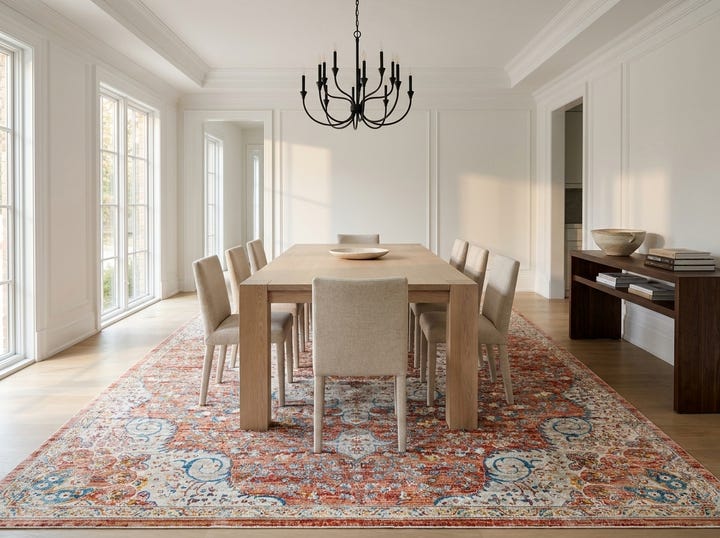
Dining room rug sizing is dictated by one rule: the rug should extend at least 24 inches past all sides of the table so chairs stay on the rug even when pulled out.
- 4-person square or round table – 6′ x 9′ or a 6′ round
- 6-person rectangular table – 8′ x 10′
- 8-person rectangular table – 9′ x 12′
- 10-person rectangular table – 10′ x 14′
If chairs slide off the rug when someone sits down, the rug is too small. This is the most common dining-room rug mistake and it’s worth measuring your table before you buy.
Kitchen
Kitchen rugs are usually runners or accent sizes rather than large area rugs.
- In front of the sink – A2′ x 3′ or 2′ x 6′ runner depending on counter length
- Galley kitchens – A 2′ x 8′ or 2.5′ x 10′ runner down the center
- Kitchens with an island – A runner between the island and counter, sized to leave 6 to 8 inches of floor at each end
- Eat-in kitchens – Follow dining room sizing rules for the table area
Entryway
Entryway rugs need to be sized to the space and to what greets you when you walk in.
- Small foyer – A 2′ x 3′ or 3′ x 5′ rug
- Medium entryway – A 4′ x 6′ rug
- Long, narrow entryway – A runner sized to leave 6 to 12 inches of floor at each end
- Grand foyer with a round center – A 6′ or 8′ round rug centered under a chandelier or table
Hallway
Hallway runners should leave 6 to 12 inches of bare floor at each end and about 4 to 5 inches on each side. Standard runner lengths are 6′, 8′, 10′, and 12′, but you can also order custom lengths for long hallways.
Bathroom
Bathroom rugs are usually small accent sizes:
- In front of the sink – A 2′ x 3′
- Along a double vanity – A 2′ x 6′ runner
- In front of the tub – A 2′ x 3′ or a small round rug
Home Office
For a home office, size the rug to your desk and chair.
- Small desk – A 5′ x 8′ rug centered so the chair rolls entirely on the rug
- Large desk or L-shape – A 6′ x 9′ or 8′ x 10′
- Full room styling with a seating area – 8′ x 10′ or larger
The key: your chair should never roll off the rug during normal use. If it does, the rug is too small.
Quick Rules to Remember
If you take nothing else from this guide, remember these:
- When in doubt, size up. A slightly-too-big rug always looks better than a too-small one.
- Leave 8 to 24 inches of bare floor around the edge of the rug.
- All legs on, front legs on, or no legs on – pick one and commit. Half-on, half-off looks accidental.
- Measure with painter’s tape before you buy. It takes five minutes and prevents returns.
- Chairs should stay on the rug when pulled out from a dining table.
The Bottom Line
The right rug size makes a room feel finished. The wrong one makes even a beautiful rug look like a mistake. Take the time to measure, tape out your space, and match the rug to how you actually use the room – not just to the price tag or the pattern.
A rug is one of the biggest decorative purchases you’ll make for your home. Getting the size right is what separates a rug that transforms a room from one that just sits in it.
About Rugs.com
Rugs.com is a one-stop online rug shop for all your floor covering needs. With over 100,000 rug designs, the extensive selection of indoor and outdoor rugs offers a wide variety of shapes, styles, and textures – perfect for every season of the year and season of life. With more than 60 years of experience in hand-knotted and machine-woven rugs, the family-owned and operated business believes that “Beneath Every Moment” – whether it is a baby’s first step, a first dance, or a cherished memory – there should be a beautiful rug. Helping shoppers find the perfect foundation for life’s moments, Rugs.com is making online shopping simple with the lowest possible prices, fast and free shipping every day, award-winning customer support, and a 30-day free return policy. Rugs.com ships millions of rugs nationwide from the company’s South Carolina and California warehouses. Learn more at www.rugs.com.